
The recommendation should begin with what was actually there.
REAL PROJECTS • REAL PROPERTY PHOTOS • DOCUMENTED RESULTS
Promises are cheap.
The finished property is the proof.
Anyone can tell you they do good work. The better question is: can they show you the same property before the work, the conditions they found and the result they left behind? That is the standard RID-ICK is building around.
Real before → after proofSame property. Same roofline. Condition documentationContext first. Details second. Manufacturer-backed optionsProduct proof you can verify.
No mixing unrelated houses into one fake transformation.
The close-up should connect back to the whole-property condition.
The finished work should make the change obvious.
REAL ROOF TRANSFORMATION
Same property. Before and after.
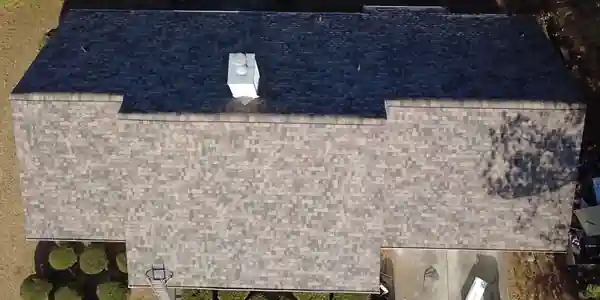
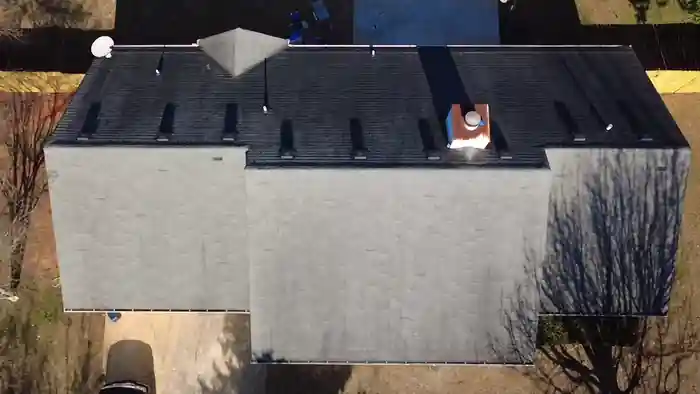
No stitched-together sequence. No different house standing in for the “after.” These two photos document the same roof before and after the replacement.
ROOF TRANSFORMATION
The roof changed. The house did not.
Same footprint. Same chimney. Same property. The starting condition and completed result can be compared without asking you to trust a caption or imagine what changed.
Same propertyDocumented starting conditionCompleted roof
WHAT WE FOUND
Proof starts before the repair.
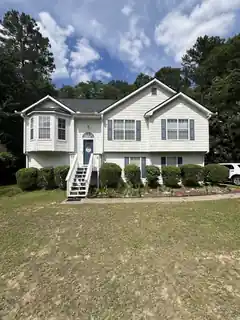
A useful inspection does not throw random close-ups at you. It shows the property first, then the system-level condition, so the recommendation has context.
SAME-PROPERTY CONDITION PROOF
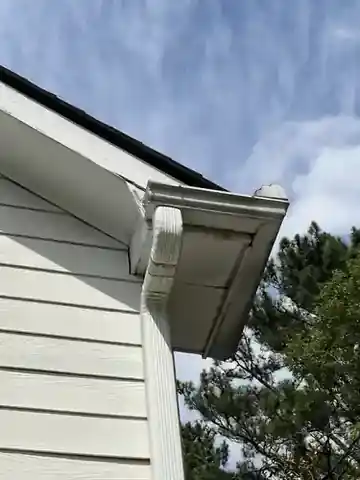
The close-up matters more when you can see where it belongs.
These photos come from the same property. The whole-house view establishes context; the detail view shows the gutter, fascia and soffit condition up close. That is how a homeowner should be able to understand what is being recommended and why.
Whole-property contextSystem-level detailPhoto documentation
THE WORK BETWEEN BEFORE + AFTER
The finished photo only tells part of the story.
The public proof should match the actual project. If a stage was not documented for the public gallery, we do not substitute a different house and pretend it belongs in the sequence.
Document
Capture the starting condition and the property context before the scope gets buried under new work.
Expose + verify
Once work opens the system up, confirm the conditions that actually have to be addressed.
Build the repair correctly
Materials, transitions and the hidden layers matter just as much as the surface you can see.
Finish + keep the record
Final photos give the homeowner a clean result and a project history that still matters later.
PRODUCT PROOF SHOULD BE VERIFIABLE TOO
Know what is going onto the property—not just what the estimate calls it.
The finished result is only one layer of proof. Manufacturer documentation, installation guidance, warranty information and product tools help you understand the system behind it.
OWENS CORNING
Roofing with a real system behind the shingle.
Owens Corning publishes roof-system guidance, color tools and product documentation for options such as TruDefinition® Duration® shingles with SureNail® Technology.
SureNail® TechnologyDuration® optionsBuild Your Roof® tool
Explore Owens Corning → SENOX
Seamless gutter materials with manufacturer depth.
Profiles, sizes, finishes and accessories give the gutter system more substance than a generic “aluminum gutter” line item.
Seamless gutter coilProfiles + finishesManufacturer resources
Explore Senox → RAINDROP® PRO
Gutter protection with a product system behind it.
RainDrop publishes product information, installer resources and warranty-registration requirements so the system can be evaluated beyond a sales pitch.
Product + accessory systemInstaller resourcesWarranty registration
Explore RainDrop → NDS
Drainage needs an intentional destination.
NDS publishes drainage-system products and guidance for components such as pop-up emitters that help move collected stormwater to a planned release point.
Pop-up emittersDrainage componentsInstallation guidance
Explore NDS → SHERWIN-WILLIAMS
The coating choice can have performance behind the color.
Product-level data and extensive color tools help connect exterior finish decisions to the actual property.
Exterior coatingsColor systemsProduct-level data
Explore Sherwin-Williams → SHAW FLOORS
See the floor in the room before committing.
Shaw publishes flooring collections, warranty resources and a room visualizer that gives finish decisions more context than a tiny sample.
Multiple flooring categoriesWarranty resourcesRoom visualization
Explore Shaw → PFG + PROJECT SOURCING
The right project may require more than one product family.
Material sourcing should follow the scope instead of forcing every property into one manufacturer or one prebuilt package.
Scope-first selectionMultiple categoriesProject-specific sourcing
THE STANDARD
Evidence beats adjectives.
Real property photos, clear condition documentation and verifiable product information do more for trust than another paragraph saying the work is “high quality.”
See itUnderstand itChoose deliberately
GO TO THE SOURCE
Use the manufacturer education before you make the material decision.
Video, visualization and published product information can make the system easier to understand before anything gets installed.
RAINDROP PRO • OFFICIAL VIDEO
See the product explain itself.
RainDrop’s own product video gives homeowners a closer look at the guard system than a few sales bullets ever could.
Build the roof before you buy the roof.
Compare roofing-system components and shingle options through Owens Corning’s own tools.
Open Build Your Roof® →Put the flooring in the room first.
Use the room visualizer to turn an abstract flooring decision into something closer to the finished space.
Open Shaw Visualizer →Understand the discharge side.
See how drainage components—including pop-up emitters—fit into the water-management path.
See NDS Drainage →Manufacturer names and trademarks belong to their respective owners. Manufacturer warranties, performance claims and eligibility are governed by each manufacturer’s current terms.
YOUR PROPERTY DOESN’T NEED ANOTHER GENERIC PITCH
Show us the property.
We’ll show you what matters.
Start with a free assessment. We’ll look at the actual conditions, document what we find and build the next step around the property—not around a prepackaged sales script.
No obligation • Clear next step • Conditions documented before recommendations